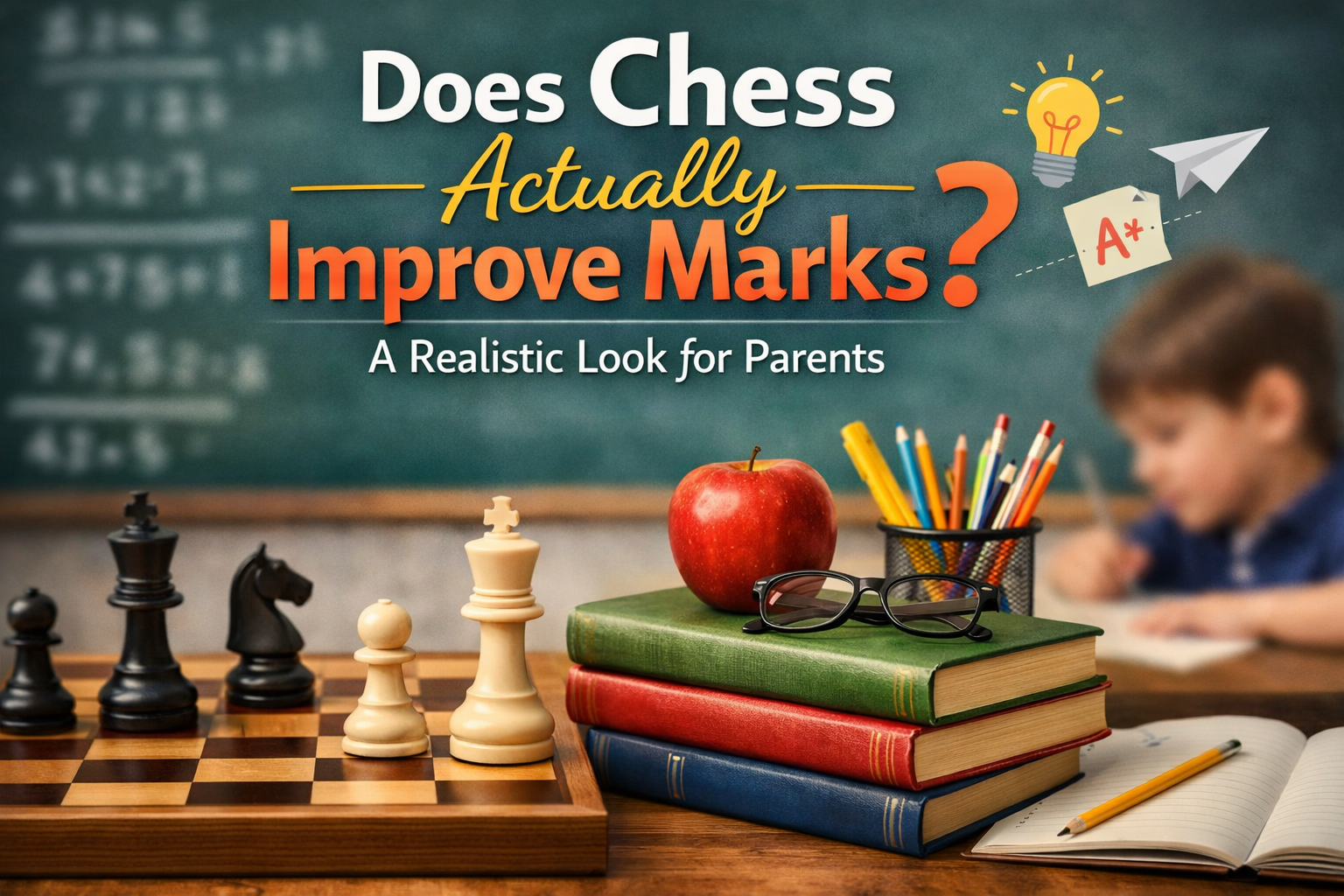
Many parents hear that chess makes children “smarter.” But the real question is: does chess actually improve school marks? The honest answer is – it can help, but not in a magical way.
Chess is not a shortcut to higher grades. A child will not suddenly score 100% in math just because they started playing chess. However, chess trains several thinking habits that are extremely useful for academics.
When children play chess regularly, they practice focus and patience. A chess game requires them to sit, observe, and think before making a move. This same habit carries into the classroom when they solve math problems, read difficult passages, or complete homework.
Chess also strengthens problem-solving skills. Every position on the board is like a small puzzle. Children learn to ask themselves questions: What is the problem? What are my options? What happens if I choose this move? This structured thinking helps in subjects like math, science, and even writing.
Another important benefit is decision-making. In chess, every move has consequences. Children learn to slow down, think ahead, and take responsibility for their choices. Over time, this builds mental discipline that helps in exams and schoolwork.
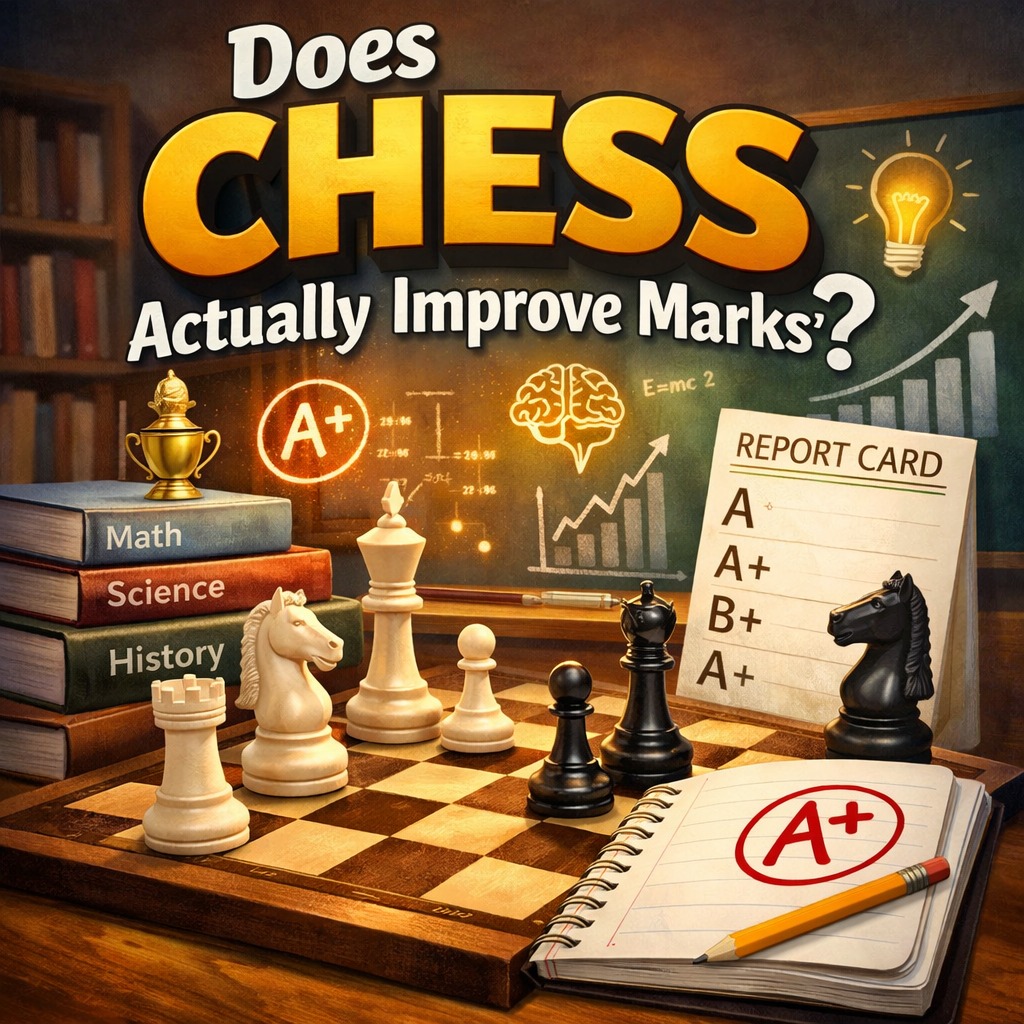
However, chess works best when it is balanced with studies, reading, and proper guidance. Playing chess alone will not replace studying. Instead, it acts like mental training for the brain, helping children develop stronger concentration and thinking habits.
For many students, these habits gradually reflect in better classroom performance and improved confidence in learning.
So while chess is not a magic formula for top marks, it is a powerful activity that builds the thinking skills behind academic success—and that is why many parents introduce chess early in their child’s development. ♟️📚
The best way to know if chess works for your child is to try it – book a free demo class.